Current practice
How does a listing reach a buyer?
Understand publishing, intermediaries and existing customer relationships.
Field research into how sellers publish, connect and build confidence—translated into a mobile product concept.
Saleh Abad explores how wholesale sellers promote products and connect with buyers across physical trade and online channels. Field interviews and a competitor review informed an early mobile concept built around seller channels, discovery and conversation.
Some sellers depend on an administrator for online visibility; trust remains relationship-based.
A mobile concept linking seller channels, discovery and product-context chat.
Seller interviews, synthesis and original wireframes. A research-led concept, ready for evaluation.
Some sellers described sending product photos and details to an administrator for publication. Others emphasized buying in person, seeing the goods and knowing who they were dealing with. Digital visibility and confidence in a transaction were different needs.
Photos, specifications and contact information.
Publication depends on another person's work.
Some responses describe delays or limited control.
Trust and purchase conditions still need to be established.
A synthesis of the administrator-mediated pattern in the interviews; other participants used different sales arrangements.
The interview matrix covers current platform use, experience with digital trade, personal transaction practices and growth ambitions. This brings business habits into the design discussion: who publishes, who buys, how payment works and what sellers want to change.
Understand publishing, intermediaries and existing customer relationships.
Explore face-to-face preference, familiarity, product inspection and payment practices.
Consider existing online sales, customer reach and the effort of changing habits.
The responses vary. A seller already trading online and a seller who strongly prefers in-person deals should not be treated as one identical user.
The interviews reveal different levels of digital adoption. Sellers already promoting goods online provide a focused starting audience for exploring direct publishing and customer reach. The next research step is to examine the buyer side of the relationship.
The persona describes a digitally comfortable shop administrator seeking growth, more publishing control and reliable access. Its scenario connects limited returns from channel promotion with the need to reach relevant customers.
This gives the seller-channel concept a specific starting audience: people already trying to sell online, rather than every wholesaler.
The board groups challenges under access, trust, platform limitations and loyalty. The following synthesis highlights the tensions most relevant to the mobile concept.
Some sellers send material to an administrator; delays and limited publishing control appear in the responses.
Design implication: explore direct publishing while keeping the effort manageable.
Participants describe personal familiarity, seeing products and transaction security as reasons to prefer physical trade.
Design implication: support evaluation and dialogue without treating a profile as a guarantee.
Reported online-sales activity and attitudes toward digital trade vary across the matrix.
Design implication: identify an initial audience instead of assuming universal adoption.
Research themes translated into design implications.
Some sellers send product material to an administrator.
Explore seller-controlled channels.
Channel creation and product cards; publishing effort still needs testing.
Sellers describe familiarity and product inspection as sources of confidence.
Make seller and product context available before contact.
Seller profile and product-context chat; payment assurance remains outside the shown solution.
Participants differ in how much business they conduct online.
Evaluate the concept with a defined initial group.
Start with digitally active sellers; willingness to switch remains an open question.
The synthesis groups concerns into access, trust, platform limitations and loyalty, then connects challenges to needs and possible responses. Administrator dependency sits alongside secure-payment and customer-reach concerns.
Direct publishing addresses control; discovery addresses visibility. Transaction assurance is a separate need, so a seller profile cannot stand in for a secure-payment solution.
The review records straightforward registration, verification and buyer–seller interaction as strengths. It flags the lack of a separate buyer area and restrictions in the free plan, alongside external market risks and opportunities.
The design question becomes how to support distinct buyer and seller tasks while keeping their conversation connected. The review informed the separation of buyer and seller responsibilities in the architecture.
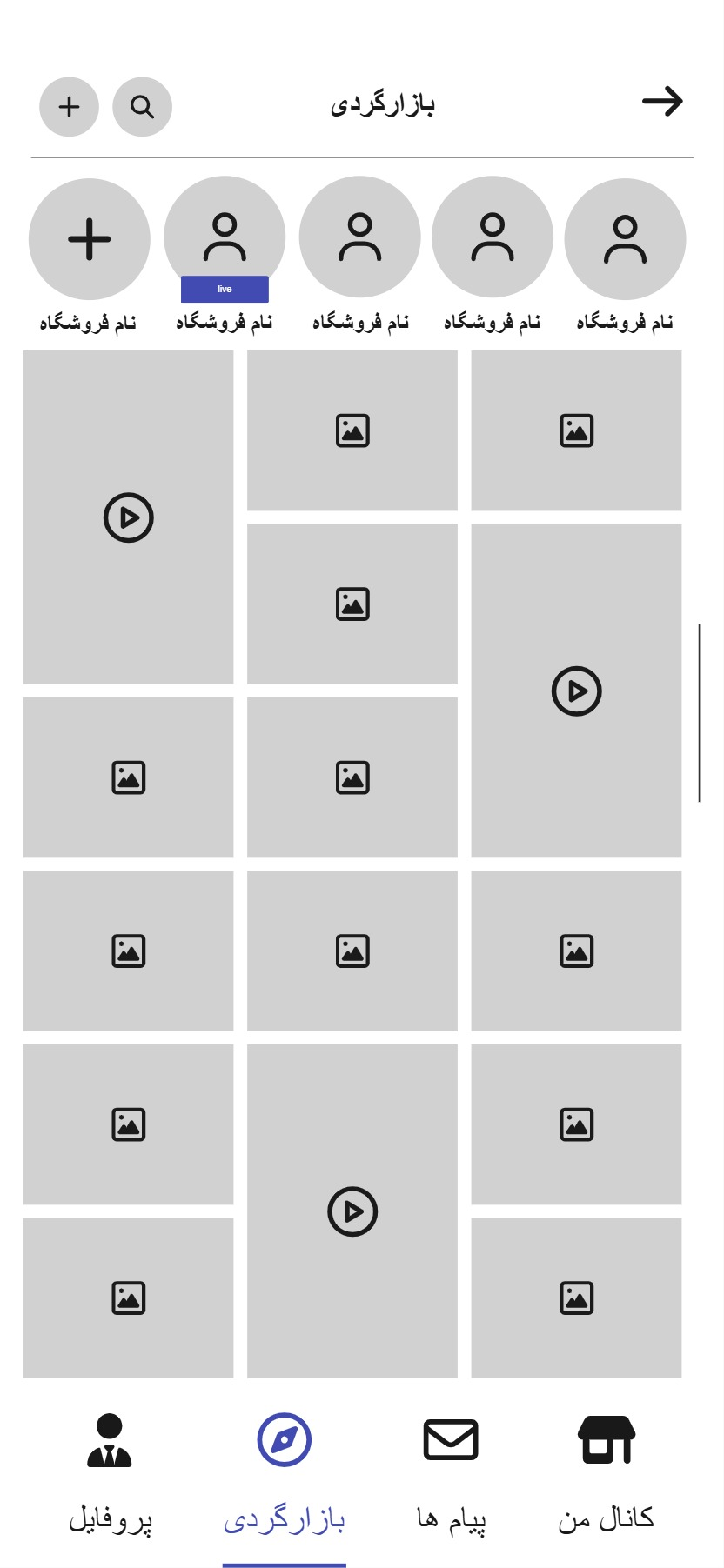
The wireframes concentrate on channels, seller profiles, discovery and chat. Together, they form a concept for introducing goods and beginning a buyer–seller conversation.
Create a channel, present products, explore content, inspect a profile and discuss an item.
The synthesis identifies secure payment and transaction guarantees as separate workstreams. This concept focuses on product discovery, seller visibility and the first conversation.
An independent product can offer more control, but asks sellers and buyers to move from familiar channels. The value of that switch needs to be clear in the seller’s everyday workflow.
The strongest next step is to test that value with sellers already using digital channels, while comparing the concept with improvements to their existing workflow.
The matrix places channel creation, mobile-number login and communication in the high-importance, high-urgency quadrant. Stories and pinned chats sit in the high-importance, lower-urgency area; live streaming and appearance customization sit lower on both axes.
The shown wireframes focus on channels, discovery and conversation. The document makes feature importance and urgency explicit, helping keep the first concept focused.
The structure separates My messages from My channels, with search, menus and a floating action represented beneath the main branches.
The wireframes make these recurring destinations visible, so publishing and following up on a conversation are organized as distinct tasks.
Three connected ideas, illustrated with the original mobile wireframes.
Some sellers send photos and details to an administrator. The concept gives channel creation and product presentation their own screens.
The setup asks for a channel name, description and image before moving into the seller’s product space.
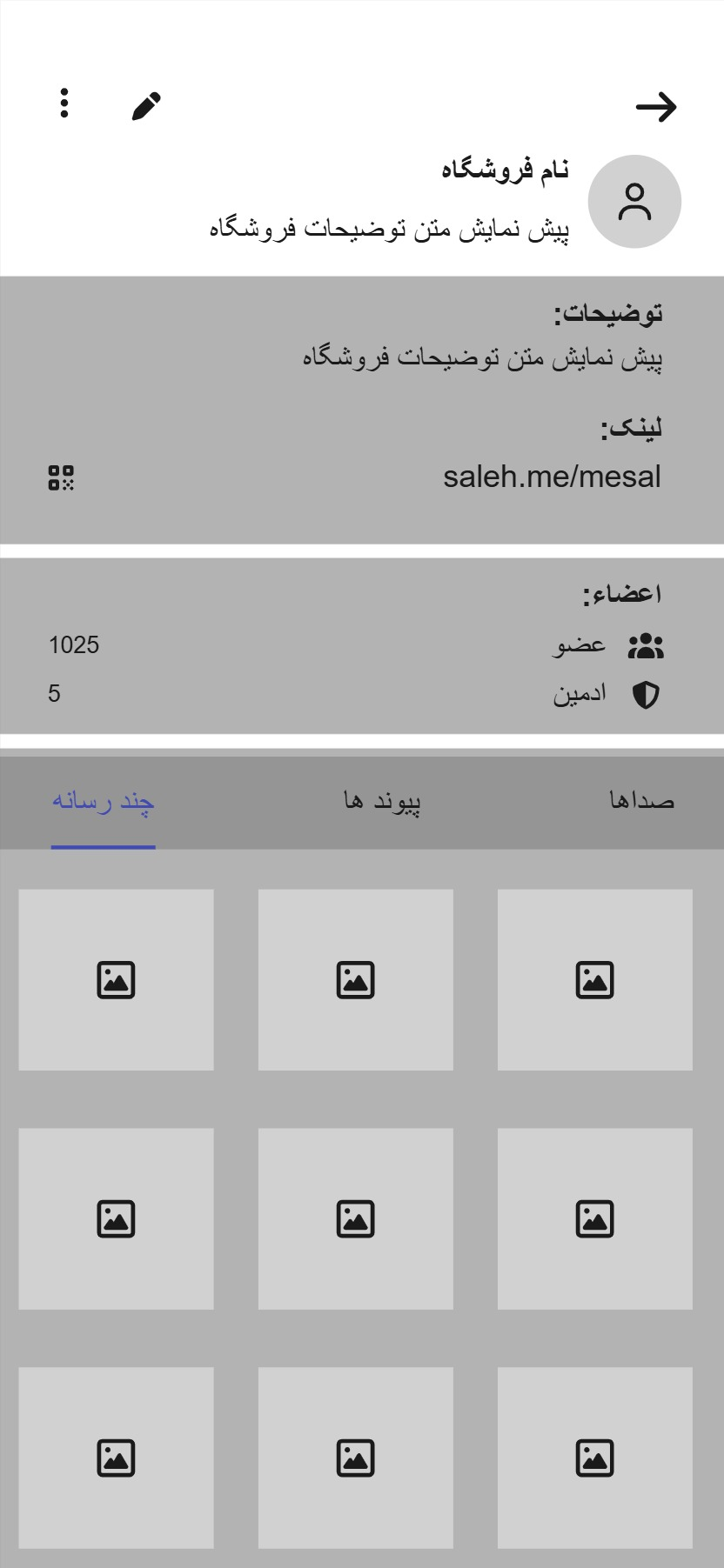
Explore brings product content together. The seller profile adds a place to review the business and its range before making contact.
The seller page gathers the business description, shareable link and product media in one place.
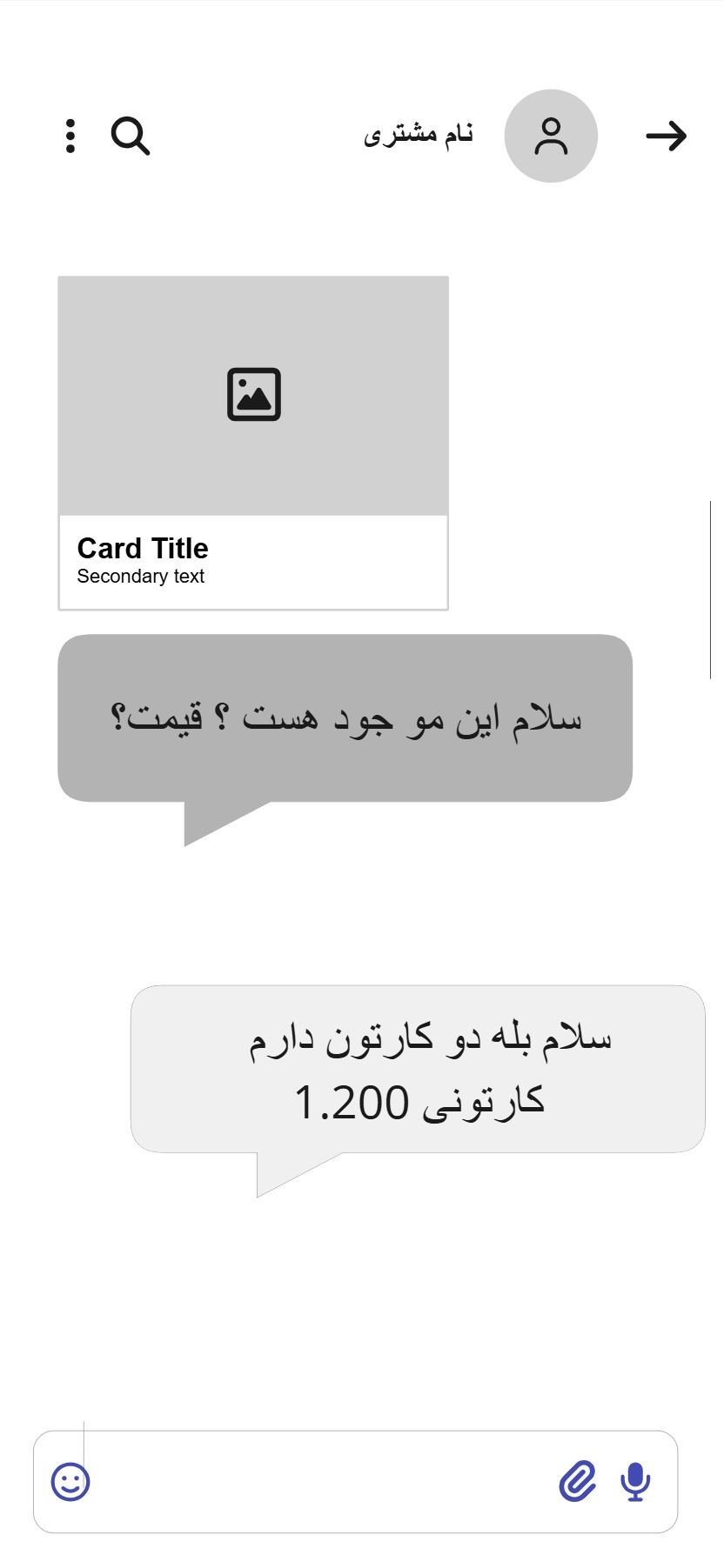
The product card stays visible alongside questions about availability and price, giving buyer and seller a shared reference.
The item provides context when a conversation becomes specific.
The proposed buyer journey connects discovery to a product-specific conversation. The buyer and seller architectures show how the same marketplace supports different responsibilities; the wireframes below make the core buyer sequence tangible.
The seller map connects entry and login to profile, explore, shop, chat and category search. The shop branch includes adding a shop, publishing a product or announcement and a premium option.
This maps the responsibilities behind the channel-creation and product-channel screens, and shows where account and commercial features would fit.
The buyer map separates profile, explore, products, chat and category search. Product information connects to a seller page and product selection; the account branch includes saved products and purchase history.
The screen sequence below concentrates on a core part of that structure: discover, review the seller and ask about an item.
The project translated seller interviews into a focused mobile concept. The synthesis separated three needs—visibility, publishing control and transaction trust—so the design could address the first connection without treating every problem as one feature. The output brings persona work, competitor analysis, prioritization, role-based architecture and six wireframes into one traceable design direction.
A concept for seller channels, discovery and product-related conversation, alongside the needs that remain unresolved.
Independent publishing, the information buyers need before contacting a seller, and the reason either side would switch from existing channels.
My main learning: define the initial seller segment and the reason to change habits before expanding the feature set. A marketplace needs a convincing path to adoption as well as a clear interface.
Task: Create a channel and prepare a product listing.
Observe: Where assistance is needed, which information is missing and whether this improves on sending material to an administrator.
Task: Find a relevant item, review its seller and ask about availability.
Observe: Whether the buyer identifies the right seller and item, and what information is still needed before proceeding.
Task: Compare the concept with the participant’s current workflow.
Observe: The concrete benefit or cost of changing channels; avoid treating stated interest as adoption.
Read the interview matrix, synthesis, competitor analysis and original wireframes.
Open the Miro board ↗